
Loop Master™: Color Jam Sort
Pleasure CityPuzzle
4.8623.00 Reviews
- Version
- 1.1.3
- Installs
- 1.00M
- Age Rating
- Everyone
Screenshots


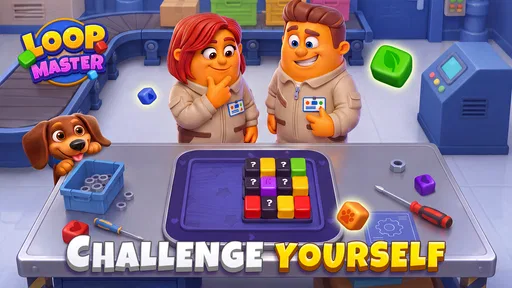
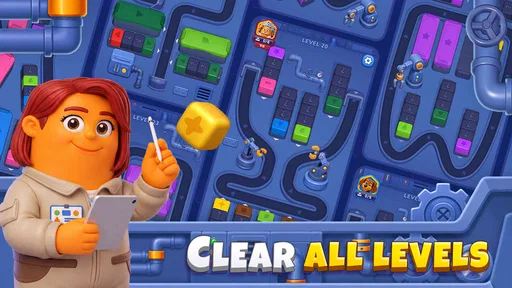
Our Review of Loop Master™: Color Jam Sort
 Analysis by Appyee
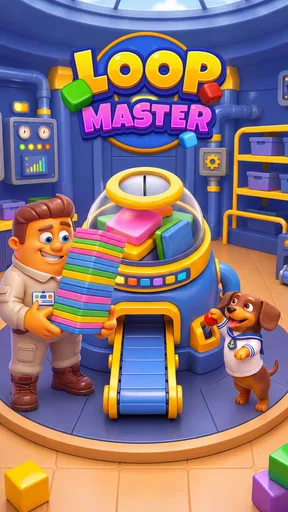
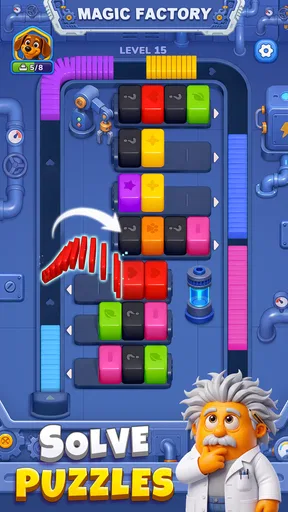
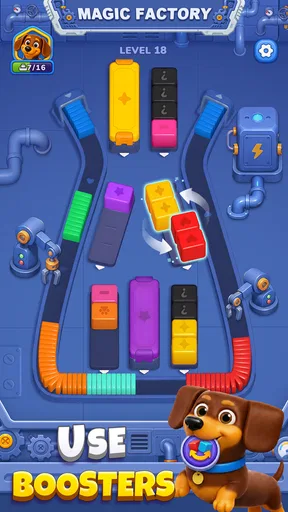
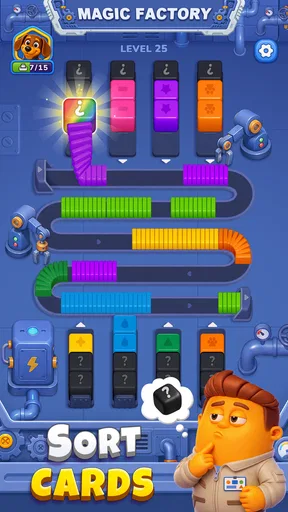
Loop Master™: Color Jam Sort is the kind of puzzle game I can open for a few minutes without needing to learn a complicated rulebook first. Its central idea is easy to understand: colored cubes move through a conveyor-style loop, and I need to guide each one toward the matching box. That sounds simple, but the circular card flow creates a steady need to look ahead rather than react to only the next piece.
After spending time with it, I found the game most appealing when I wanted a quiet sorting challenge instead of a story-heavy adventure or a fast reflex test. It belongs firmly in the puzzle category, and Pleasure City has kept the presentation focused on arranging colors and managing the flow. The game is free to download, rated for Everyone, and its current version is 1.1.2. It runs on devices using Android 7.0 or later, which makes it accessible to people using older compatible phones as well as newer models.
The store presents it with the short label “Loop Master™,” while the fuller name is Loop Master™: Color Jam Sort. I would describe it as a relaxed-looking puzzle with moments of pressure. The board may appear orderly at first, but a poor placement can make the loop harder to read and leave the right color waiting behind the wrong one. That balance between approachable rules and increasingly careful decisions is what gives the game its reason to stay installed.
What the first few minutes feel like
When I first start a game like this, I want to know whether the opening teaches me through play or throws instructions at me. Here, the main task is understandable from the visual arrangement: cubes have colors, destinations have matching colors, and the conveyor loop determines how those pieces travel. The best way to begin is simply to watch the movement for a moment before making the first choice.
That small pause matters. A new player may be tempted to send the most obvious cube immediately, but the useful question is not only “Where does this color belong?” It is also “What will this move expose, block, or leave circulating?” The loop gives the puzzle its identity. You are not merely matching pairs on a static grid; you are managing an order that keeps changing.
I found the early experience reassuring because the objective is concrete. There is no need to understand a large collection of menus, characters, or special abilities before a move makes sense. The game asks me to recognize a color relationship and then think about timing. That makes it a reasonable choice for a first-time player who wants a puzzle that can be understood quickly but still rewards attention.
The visual simplicity can also be misleading. Color sorting games often look like they should be solved by instinct, yet the loop structure makes a careless action costly. I recommend treating the first round as a learning exercise rather than trying to play perfectly. Watch how the pieces circulate, notice which destinations are currently available, and use that information to form a plan for the next few actions.
Getting ready without overthinking the setup
The setup is straightforward: install the free game on a compatible Android device, open it, and move into the puzzle. There is no reason to approach the first screen as if you need a long preparation routine. I would keep the volume at a comfortable level, make sure the screen is easy to see, and begin when I have enough attention to observe the loop rather than tapping randomly.
The game is free, although optional in-app purchases range from $0.99 to $99.99 per item. That is worth remembering before handing the device to a child or letting someone else play on your account. The Everyone rating makes the game broadly suitable in terms of age classification, but the presence of purchases still makes ordinary device purchase controls sensible for families.
I would also avoid judging the entire experience from the first few seconds. Puzzle games often reveal their personality through the decisions they ask for after the basic rule is clear. The opening teaches recognition; the more interesting part is learning how to preserve room for future moves. If the first board feels almost too easy, that is useful rather than disappointing. It gives you a safe place to understand the movement pattern.
The developer is Pleasure City, and the game has attracted an average rating of 4.8 from around 30 thousand ratings, with more than 300 written reviews. It has also passed one million installs. Those figures suggest that the format has found a sizeable audience, but I would still treat them as a starting point rather than a guarantee that every puzzle style will suit you. The important question is whether you enjoy planning around a moving loop.
How I approach the first successful action
For a first meaningful success, I suggest choosing a cube whose matching box can be reached without disturbing a more useful route. In other words, do not automatically select the nearest-looking match. First scan the available colors and identify which one has the clearest path. Then check whether moving it changes the position of the pieces that are currently supporting your next decision.
This creates a simple three-step habit. I look at the destination, trace the likely movement, and then inspect what remains behind. That last check is the part new players often skip. A move can be correct in isolation but unhelpful for the board that follows. By making the remaining arrangement part of every decision, I get a better feel for why the game is more than a basic color-matching exercise.
My practical advice is to make the first move slowly and use it to learn the loop’s rhythm. Once the destination is clear, watch what changes before planning the second move. Trying to queue several actions mentally while still learning the system can create confusion, especially when multiple cubes share similar colors or appear close together.
The most useful beginner habit is to solve for access, not just for color. A matching box is valuable only when the route to it leaves the rest of the board manageable. This way of thinking turns the first completed match into a meaningful lesson: every successful placement should improve your understanding of the next available choice.
Where new players usually get confused
The main source of confusion is the difference between a visible match and a safe match. Seeing a blue cube and a blue box does not necessarily mean blue is the correct first move. The loop may place another color in a more important position, or the action may change the order in a way that makes later matching less convenient.
Another common mistake is watching only the cube being moved. I learned to follow the entire flow instead. Before tapping, I check the destination, the neighboring pieces, and the space that will become available afterward. This wider view is especially helpful when the board contains several colors that look visually similar at a quick glance.
If a move seems to make the puzzle worse, I would not immediately assume the game is broken or that the rule is unclear. In a loop-based arrangement, temporary disorder can be part of creating a better route. The important distinction is whether the move opens a useful path or merely postpones the problem. If I cannot explain what the move is meant to accomplish, I usually wait and inspect the board again.
Color recognition may also be less comfortable for some players. The game’s core depends on distinguishing colored pieces and destinations, so anyone with difficulty separating certain shades should consider whether the visual presentation is comfortable before committing to long sessions. That is not a criticism of the basic design; it is a practical accessibility consideration for a color-led puzzle.
Small tactics that make the loop easier to read
One tactic I found useful is to identify the most constrained destination first. If one box can be reached by only a narrow sequence of actions, I give that route priority over an easy match that can probably wait. This prevents the board from becoming dominated by a problem that was visible from the beginning but ignored because another color looked more convenient.
A second tactic is to avoid spending every available action on immediate completion. Sometimes I use a move to create a cleaner arrangement rather than to finish a color at once. That can feel inefficient, but it is often better than forcing a match and leaving the loop crowded. The trade-off is between short-term satisfaction and a board that remains readable.
A third useful habit is to pause after every major change in the arrangement. I do not mean stopping for a long time; even a brief visual reset helps. The board after a successful placement is not the same board I was planning around a moment earlier. Recalculating from the new layout reduces the chance of following an outdated plan.
These habits are particularly useful in short everyday sessions. If I am waiting for an appointment or taking a break between tasks, I can play one puzzle with a deliberate rhythm instead of rushing through it. The game works well in that setting because the rule is light enough to remember, while the loop gives each session a small planning problem to solve.
How it fits beside other puzzle choices
Compared with a traditional match-three game, this feels less dependent on creating large visual combinations and more dependent on ordering. A match-three board usually encourages scanning for immediate patterns and reacting to opportunities. Here, I spend more time considering whether a move preserves access to the next color. Players who enjoy chain reactions may find this slower, while people who like spatial organization may appreciate the extra control.
It also differs from a classic static sorting puzzle. In a static format, the containers and pieces generally wait for the player, so the main challenge is capacity and sequence. The conveyor loop adds movement to the mental model. That makes the game more dynamic, but it can also make it less relaxing for someone who wants a completely predictable arrangement.
Against word puzzles, this is obviously more visual and less dependent on vocabulary. I can play it without searching for clues or recalling facts. Against fast arcade games, it is calmer and more deliberate, although a difficult board can still create pressure when a wrong choice limits the next route. The best alternative depends on what kind of concentration I want: quick pattern spotting, language solving, or controlled color flow.
I would not recommend it as the first choice for someone seeking a deep narrative, competitive multiplayer, or a puzzle built around elaborate tools and systems. Its appeal comes from one focused idea. That focus is a strength when I want clarity, but it can feel narrow if I expect a long list of modes or a constantly changing theme.
Who is likely to enjoy it most
This game is a good fit for first-time puzzle players who want rules they can understand through the board itself. It is also suitable for experienced casual players who enjoy improving their planning rather than chasing complicated combinations. The Everyone rating makes it a broadly approachable option, though younger players may still need supervision around the available purchase options.
I especially see it working for people who enjoy organizing tasks, arranging objects, or solving small problems in stages. The satisfaction comes from making the loop more manageable, not from a dramatic story payoff. If you like looking at a cluttered arrangement and finding the one move that creates order, the central mechanic has a natural appeal.
On the other hand, I would skip it if color sorting feels repetitive to you or if you need a strong sense of progression beyond the puzzle board. I would also choose another game if I wanted a relaxing experience with no possibility of a poor sequence. The loop requires some attention, and the game is more rewarding when I am willing to think before tapping.
A realistic way to use it during the day
Imagine having ten quiet minutes before leaving home. I can open the game, play one board at a measured pace, and stop after a successful arrangement without needing to remember a complex story or rebuild a large strategy. If I make a mistake, the lesson is immediate: I can see which route became blocked and adjust my approach on the next attempt.
That makes it more practical than many puzzle games for short breaks, but there is a trade-off. A quick session still demands visual attention, so I would not play while walking, crossing a street, or doing anything that requires awareness of my surroundings. The game is casual in length and presentation, not a substitute for paying attention to the real world.
For family use, I would let a child explore the first boards while explaining the idea of looking one move ahead. Rather than solving every puzzle for them, I would ask which color has the safest route and what might happen after it moves. That turns the game into a small exercise in sequencing. Because purchases are available, I would keep account controls in place before sharing the device.
What I would like you to know before installing
The strongest reason to try it is the combination of a simple visual goal and a more thoughtful movement pattern. I can understand the objective almost immediately, yet I still have to develop a method for avoiding blocked routes. The game does not need a large explanation to become interesting; its challenge emerges from the relationship between the loop and the destinations.
The main limitation is that the same focused idea will not satisfy everyone. Players who prefer variety may find the color-and-box structure too contained, and anyone looking for a purely passive time-killer may be surprised by how much attention a later puzzle can require. I also think the free-to-play format deserves a conscious approach: enjoy the core experience first, and treat any purchase as optional rather than necessary to understand whether the game suits you.
With its current version, broad device compatibility from Android 7.0 onward, and free entry point, it is easy to test without a large commitment. I would begin with a few boards, use the slower observation habits described above, and decide based on whether the loop makes you curious about the next arrangement. The high average rating and large install base show that many players have responded positively, but your own reaction to the sorting rhythm matters more.
My final view is favorable, with clear boundaries. Loop Master™: Color Jam Sort is worth trying if you want a clean, visual puzzle that rewards planning around movement rather than tapping every obvious match. Start by watching the flow, choose routes that preserve access, and reassess after each major placement. If you enjoy that process, the game offers a satisfying way to turn a short break into a small problem-solving session. If you need story, competition, or a wider range of mechanics, another puzzle category will probably serve you better.
Verdict
Strengths of Loop Master™: Color Jam Sort
- Simple color-sorting rules are easy for new players to understand.
- Short levels fit well into quick breaks or casual play sessions.
- Gradual difficulty increases help introduce more complex arrangements.
- Bright visual design makes the colored pieces easy to distinguish.
- Offline play can make it convenient during travel or without a connection.
Limitations of Loop Master™: Color Jam Sort
- Later puzzles may feel repetitive if you expect varied gameplay mechanics.
- Small color differences could be challenging for players with color-vision issues.
- Mistakes can become frustrating when levels require careful move planning.
- Ads may interrupt the experience, depending on the current app version.
- The game offers limited appeal for players seeking story or competitive features.
Other Releases by Pleasure City
View All
Goods 3D Sorting: Match Games
Puzzle4.9
Similar Picks in This Category
View All
Block Blast!
HungryStudio4.8

Braindom: Brain Games Test
Lahana Game Studio4.6

AMAZE!
CrazyLabs LTD4.6

Sudoku - Classic Sudoku Puzzle
Oakever Games4.7

Art Puzzle - Puzzle Games
Easybrain4.8

Amaze GO!
Oakever Games4.9
Frequently Asked Questions
What is Loop Master™: Color Jam Sort?
Loop Master™: Color Jam Sort is a relaxing color-sorting puzzle game built around organizing loops, rings, or similarly colored pieces into the correct groups. Each level challenges you to plan your moves carefully, match colors, and clear the board without getting stuck. The early stages are easy to understand, while later puzzles require more patience and forward thinking.
How do you play Loop Master™: Color Jam Sort?
The main objective is to sort pieces by color and place matching items together, usually by tapping or dragging them into available positions. You need to consider the order of your moves because limited spaces can quickly make a level difficult. As you progress, the game introduces more colors, tighter layouts, and increasingly complex arrangements that test your logic and planning skills.
Is Loop Master™: Color Jam Sort free to download and play?
The game can generally be downloaded for free, allowing you to try its core puzzles without paying upfront. However, free gameplay may include advertising, optional purchases, extra moves, hints, or other convenience features. Before downloading, it is worth checking the current store listing for details about in-app purchases, subscription options, and whether certain content or tools require payment.
Can Loop Master™: Color Jam Sort be played offline?
Many of the basic sorting puzzles may remain playable without a constant internet connection, which makes the game suitable for short sessions while traveling or when mobile data is unavailable. Nevertheless, features such as advertisements, rewards, cloud synchronization, updates, leaderboards, or purchase verification may require internet access. Offline availability can also vary by version and device.
Is Loop Master™: Color Jam Sort suitable for children and casual players?
Loop Master™: Color Jam Sort is easy to pick up and does not require complicated controls, making it accessible to casual players and fans of relaxing logic games. Its color-based mechanics are straightforward, although some levels can become surprisingly challenging. Parents should still review the app’s age rating, advertising, and in-app purchase settings before allowing younger children to play.
Play our best games!


